Flat Roof Repair
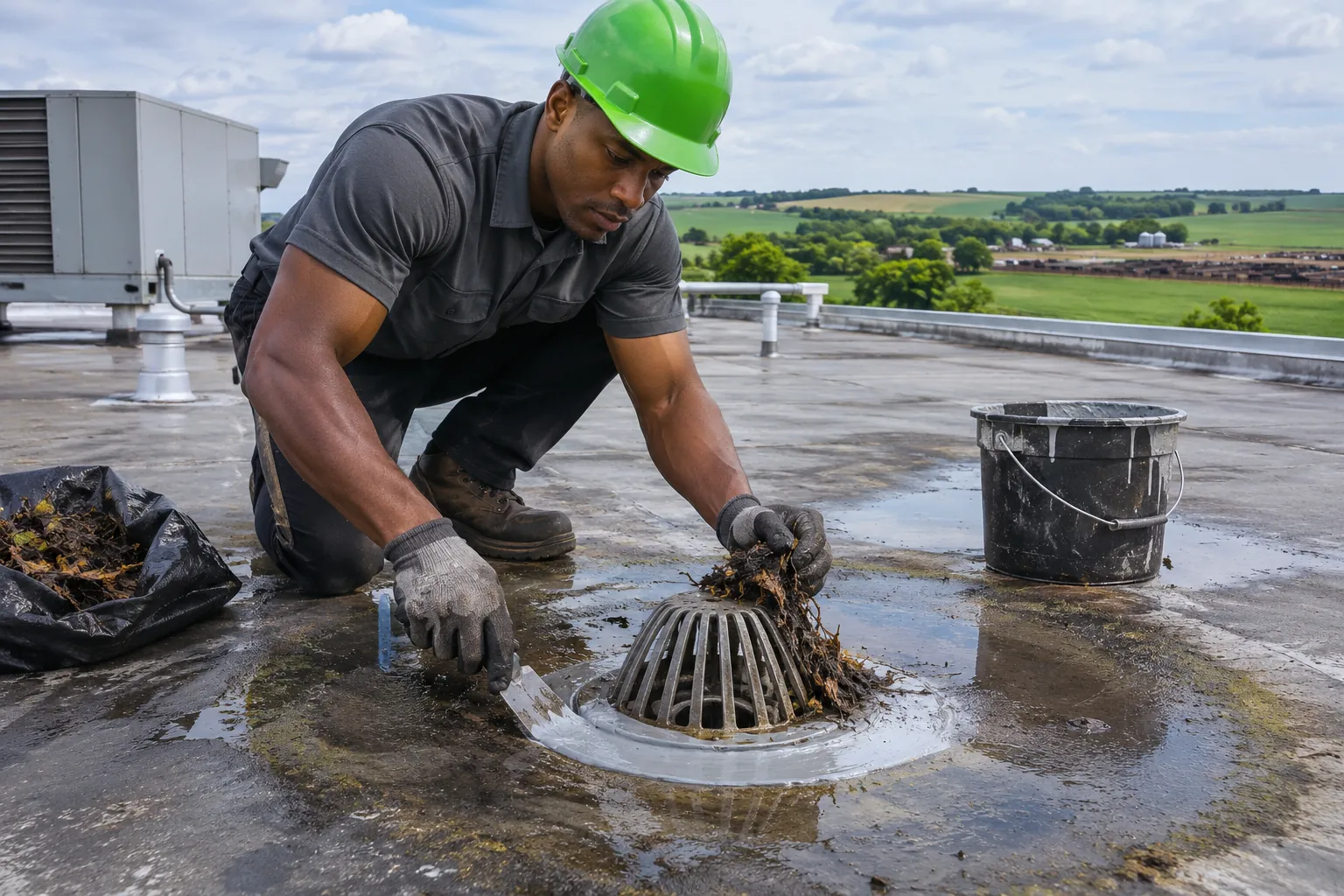
Low-slope office additions and flat sections beside a steel roof get drain, seam, and flashing repairs on the membrane.
Flat Roof Repair in NorfolkAs a Norfolk commercial metal roof repair contractor, we replace worn fasteners, reseal laps and ridge caps, and swap rusted panels on steel buildings.
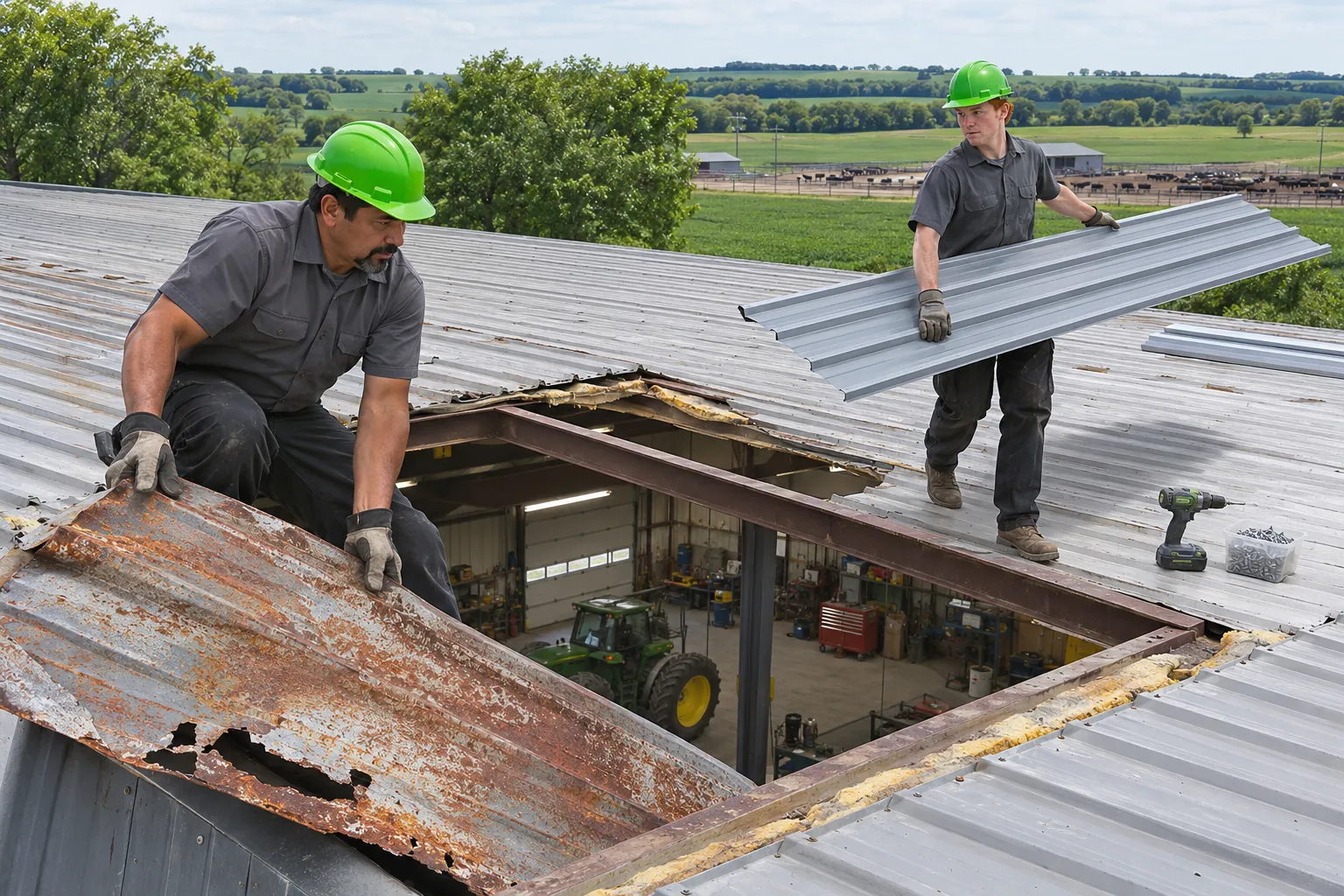
Norfolk commercial metal roof repair covers the steel roofs on ag shops, warehouses, plants, and offices around town. Most are exposed-fastener panels, and some are standing seam with hidden clips. Both move every day as the steel heats and cools.
That movement works screws loose, cracks rubber washers, and opens end laps. We check every fastener row, every lap, and the ridge, then repair them in order so a fixed leak at one screw stays fixed instead of moving to the next one.
Metal roofs leak at the same five places, and each one has its own repair.
Rubber washers dry out and crack under sun and cold. Screws back out as panels move, and the hole opens a little more each season.
End laps and side laps lose sealant and start to wick water in wind-driven rain. Cleaned laps get new sealant and a fabric-reinforced cover.
Foam closures shrink and caps lift, letting snow and rain blow under the ridge. New closures and refastened caps seal the top of the roof.
Rust starts at laps, cut edges, and spots where water sits. Panels rusted through get cut out and replaced with steel of the same rib.
Pipe boots, vent stacks, and plastic skylight panels sit in the panel field. Their flashing and sealant wear out before the steel around them.
Steel roofs get repaired section by section. These signs decide whether a panel is resealed or replaced.
| Panel Condition | Reseal And Refasten | Replace The Panel |
|---|---|---|
| Surface rust | Light rust on the face, steel solid underneath | Rust holes a screwdriver pushes through |
| Fastener holes | Holes the original size, washers worn | Holes stretched past an oversized screw |
| Laps | Sealant failed but the lap lies flat | Lap edges curled or torn by wind |
| Panel shape | Flat panel with a loose screw line | Bent, creased, or dented ribs |
| Underneath | Dry insulation and purlins | Wet insulation or rusted purlin tops |
Call us. Loose panels and caps get refastened or covered right away so the next storm has less to peel back.
Metal roof repairs follow five steps, working across the roof in rows.
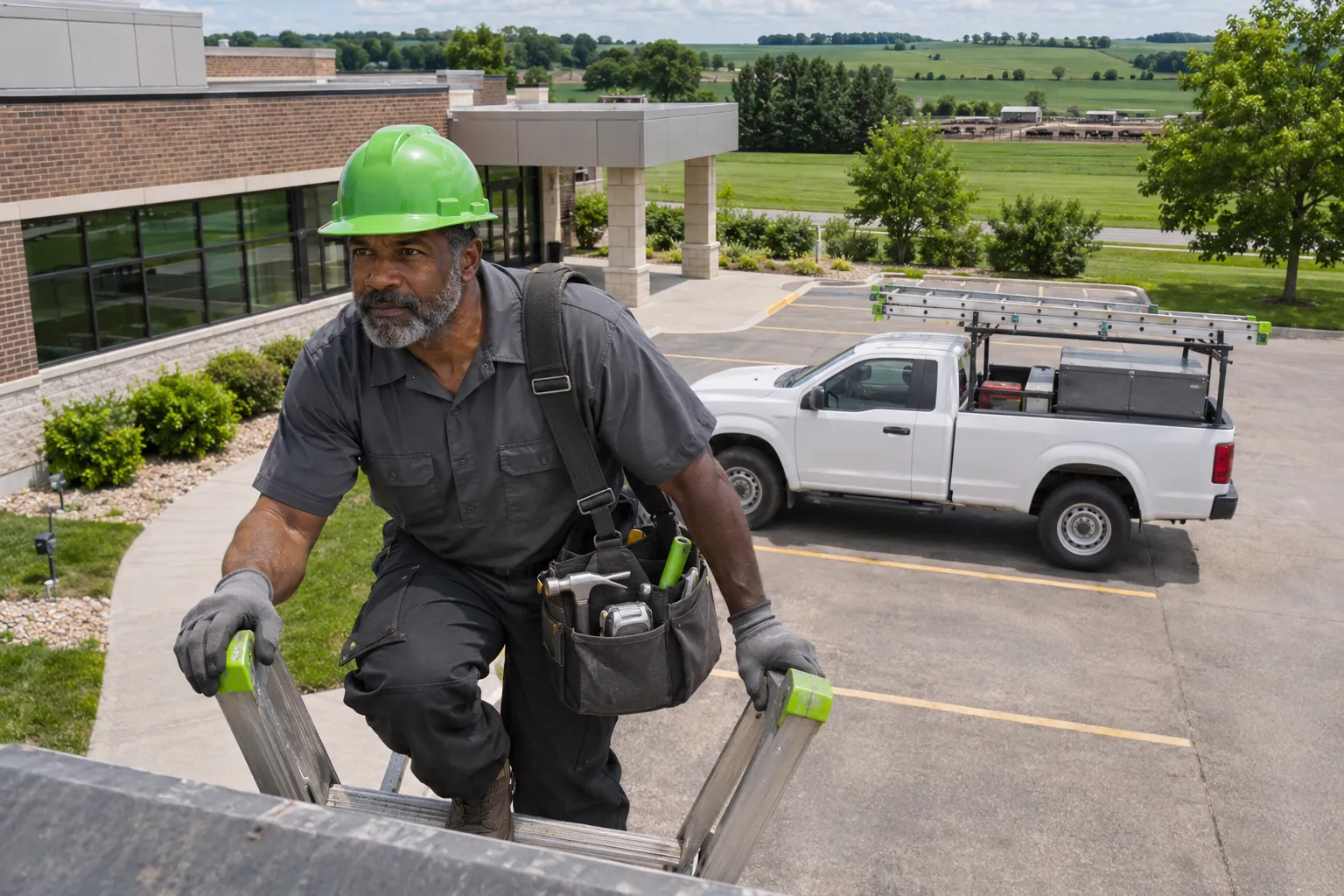
Each row of screws gets checked from eave to ridge, and loose or cracked fasteners are marked. Laps, caps, and penetrations are checked on the same pass.
Inside, rust on purlins and stains on insulation show where water has been getting in. Wet insulation is marked for replacement.
Worn screws come out and new gasketed fasteners go in. Stripped holes get oversized screws, and abandoned holes are sealed and covered.
Laps are scraped of old sealant, then sealed and covered with reinforcing fabric. Ridge caps go back on over new closure strips.
Rusted-through or wind-bent panels are replaced with matching steel. Each new lap is sealed and fastened on the original pattern or tighter.
How a steel roof reads before and after the work.
Metal buildings often have a flat office roof or plant equipment on top. These services cover them.
Low-slope office additions and flat sections beside a steel roof get drain, seam, and flashing repairs on the membrane.
Flat Roof Repair in Norfolk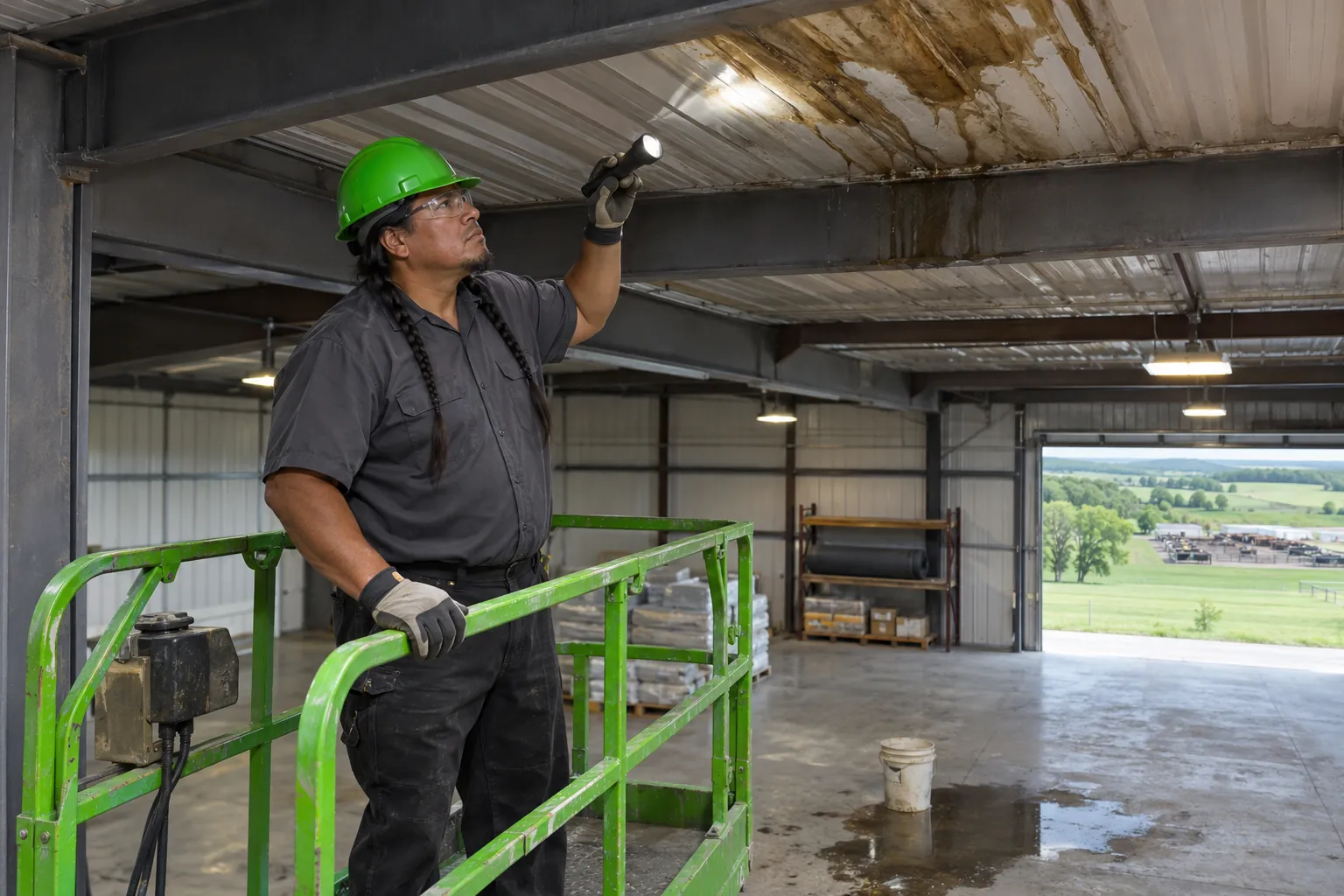
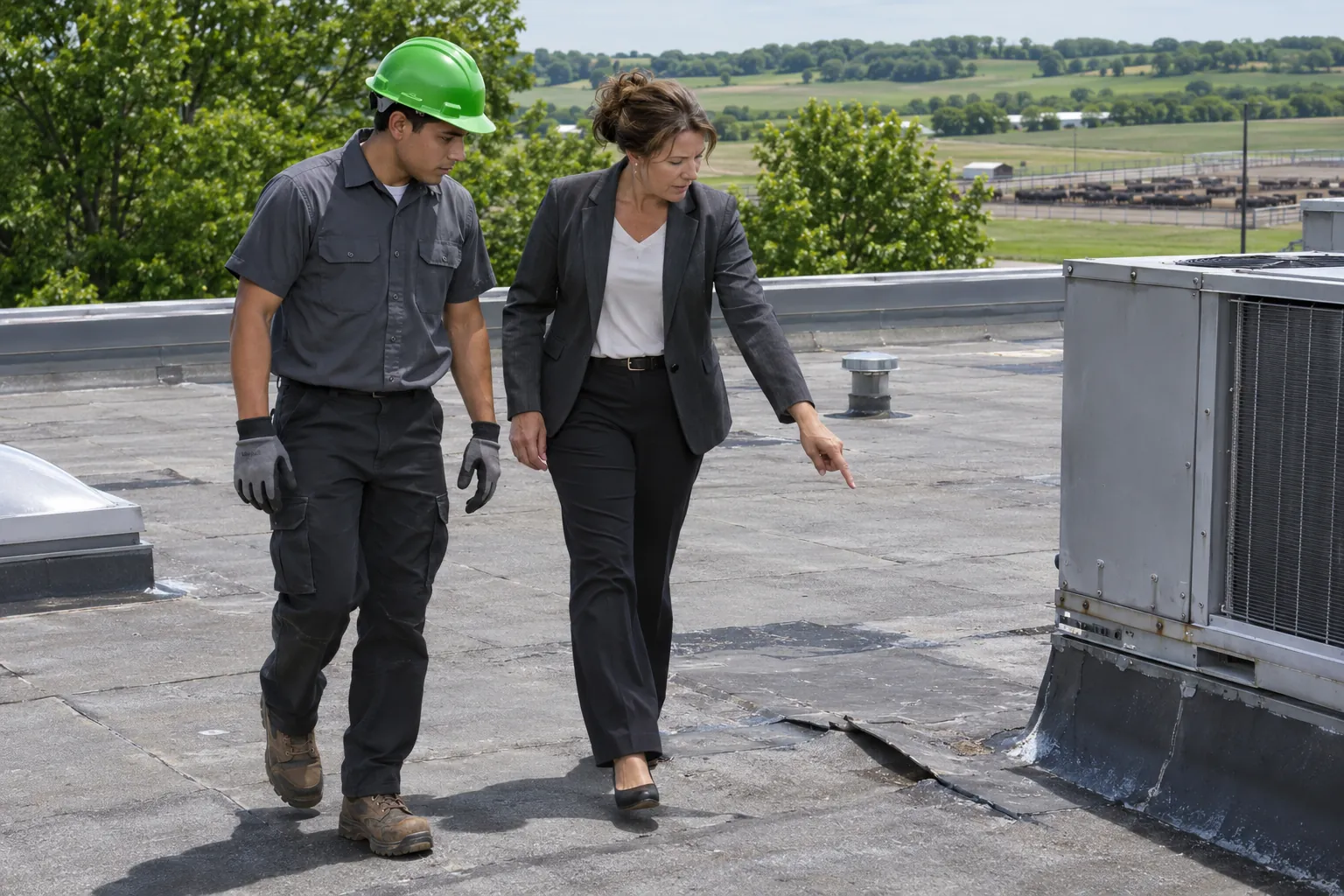
When water shows up inside a metal building and the source is unclear, tracing follows it along the purlins to the lap or screw.
Commercial Roof Leak Repair in Norfolk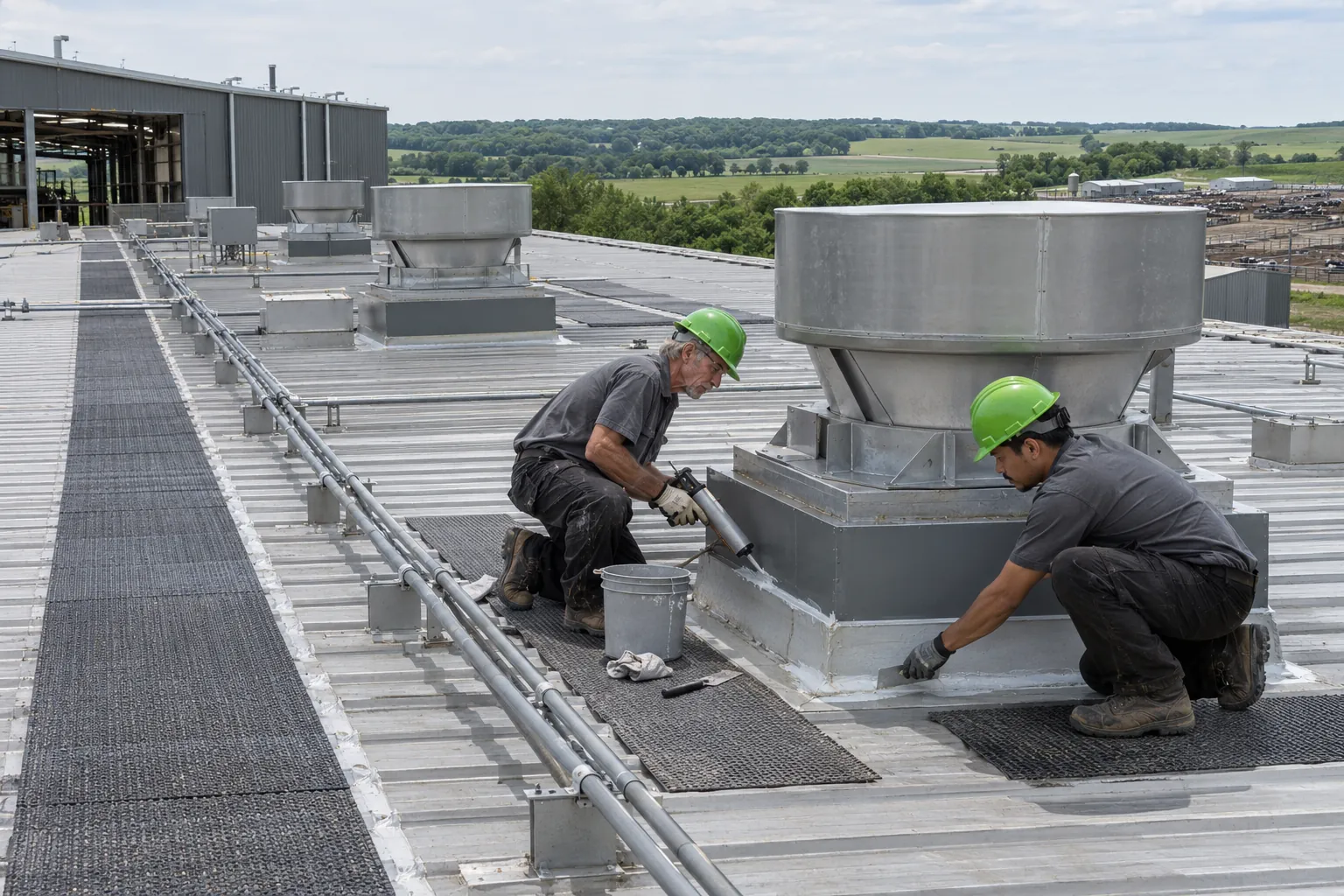
Steel plant roofs carrying fans and ducts need curb work, since vibration loosens curbs and process exhaust wears down sealant.
Industrial Roof Repair in NorfolkAnswers for exposed-fastener and standing-seam steel roofs.
Seam repair begins by scraping off the old, failed sealant and cleaning the lap. Loose fasteners along the lap are tightened or replaced. Fresh seam sealant goes on with reinforcing fabric embedded over the joint. On standing-seam roofs, we also check the clips and re-crimp seams that have opened, so wind-driven rain stops wicking through.
Cost tracks the count of fasteners, laps, and panels that need work. Resealing laps costs less than replacing panels that have rusted through. Roof height, slope, and lift access set the labor. Older buildings with discontinued panel profiles can add material cost, and wet insulation under the leak adds a replacement line. Each item is priced after inspection.
Exposed fasteners cause more leaks than anything else. Their rubber washers crack with age and sun, and the steel's daily expansion works screws loose and widens the holes. After fasteners come open end laps, ridge caps that have lost sealant, and flashing gaps around pipes and vents. An inspection checks all four.
Each leaking hole gets a new fastener with a fresh gasket. Holes that are stripped or stretched take an oversized screw that bites into solid steel. Holes left from old screws are sealed and covered with a metal patch or fabric. Working the roof row by row keeps any screw from being missed.
Lifted panels are refastened, and bent or torn ones are replaced. Wind damage starts where uplift is highest: eaves, rakes, and corners. We replace damaged trim, install new panels with a matching rib, and add fasteners where the original pattern left panels loose. Every repaired lap is sealed before the crew leaves that section.
By keeping the ridge cap tight and its closures fresh. Wind pushes rain and snow under a loose cap, and old foam closure strips shrink until gaps open. We pull loose caps, fit new closures, reseal, and refasten. Ridge vents get checked for gaps and torn screens on the same visit.
Tell us where rust or drips show up, and we will walk every panel row before pricing the repair.