
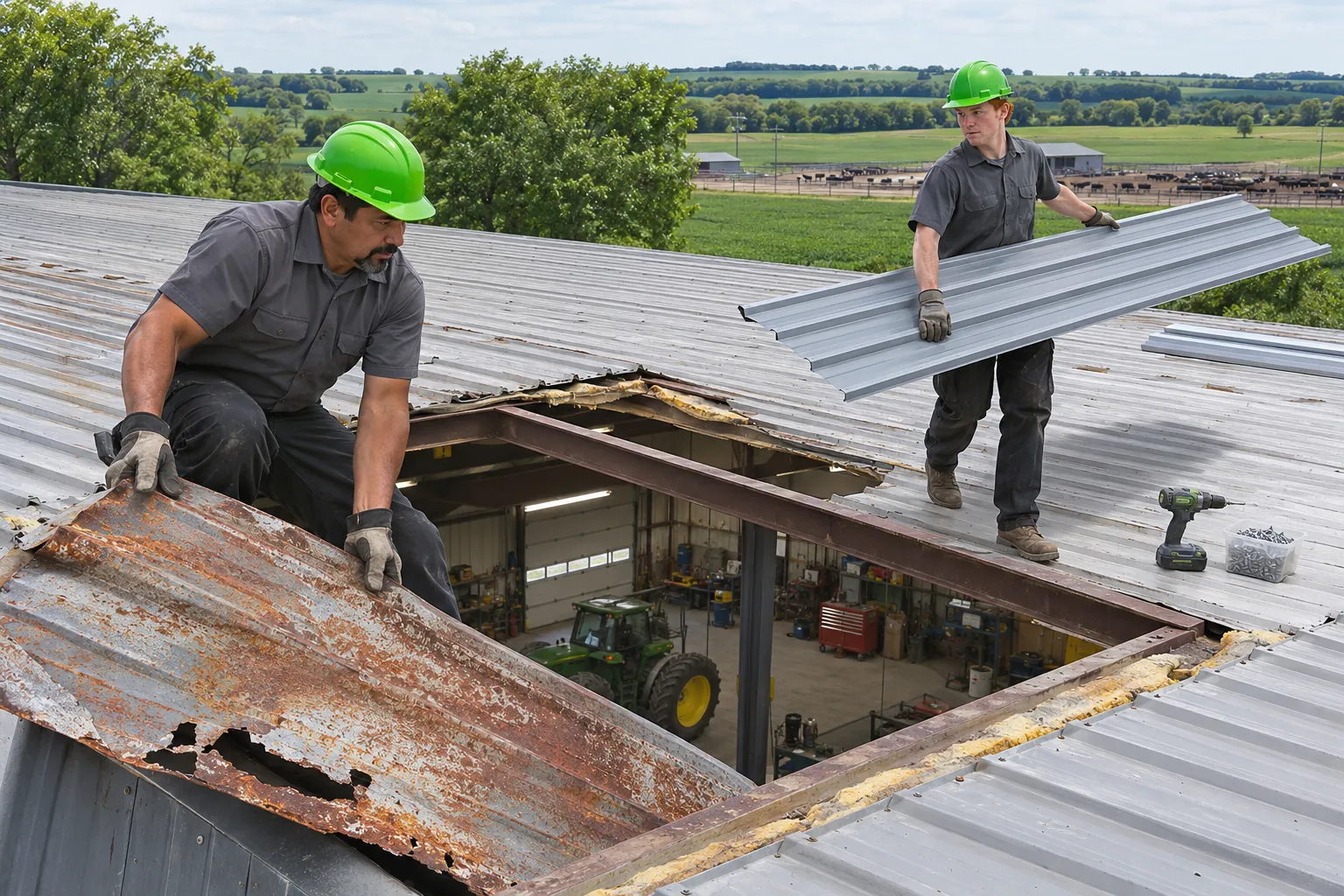
Commercial Metal Roof Repair
Steel buildings and additions next to a flat roof get worn screws, open laps, and rusted panels replaced and sealed.
Commercial Metal Roof Repair in NorfolkAs a Norfolk flat roof repair contractor, we fix open seams, failed drain flashing, blisters, and low spots on membrane and built-up roofs.
Norfolk flat roof repair covers the four low-slope systems found on most commercial buildings here: TPO, EPDM, modified bitumen, and built-up roofs. Each one fails in its own way, so the first job is identifying the sheet and how it was attached.
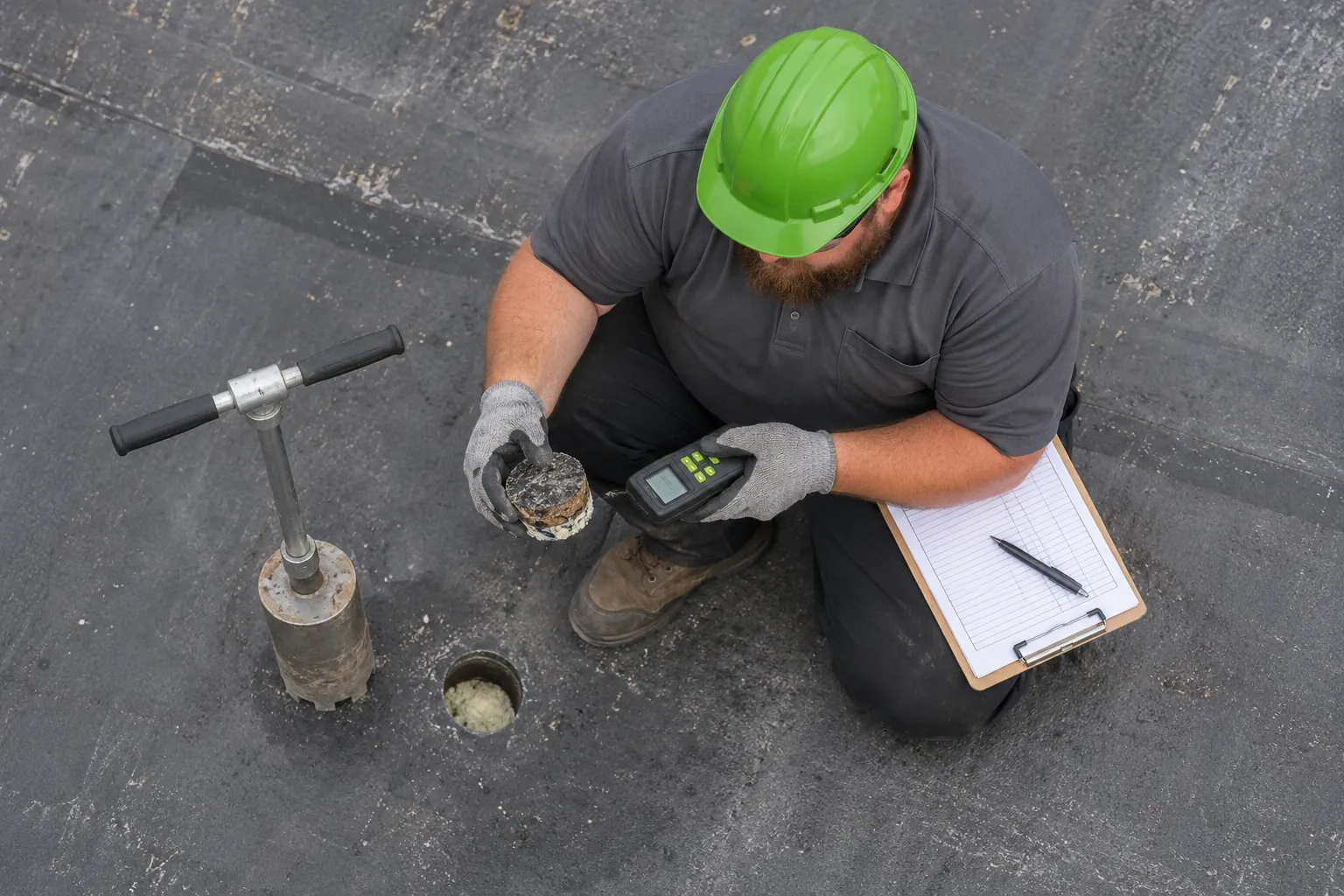
Water on a flat roof moves slowly and finds every gap. We clear drains, read the seams, and cut a core where the surface feels soft, so the repair covers the wet area and its cause along with the spot that dripped.
Five problem areas account for most flat roof calls. Each card names what we look for and how it gets fixed.
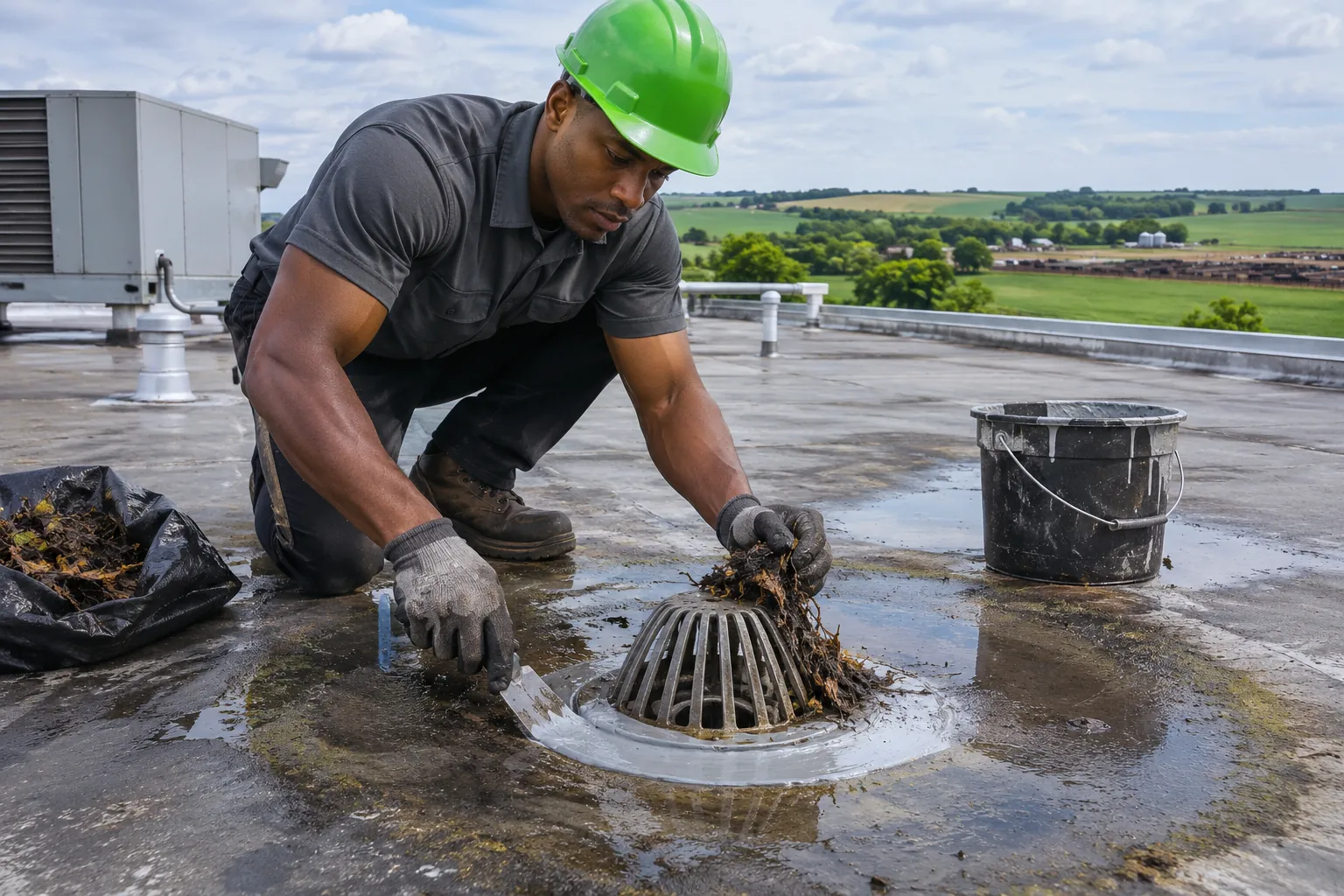
Clamping rings work loose and the membrane around the drain bowl splits. We reset the ring, replace the membrane at the bowl, and fit a new strainer.
Water that stands past two days points to a sagged deck or crushed insulation. Tapered crickets or an added drain move it toward an outlet.
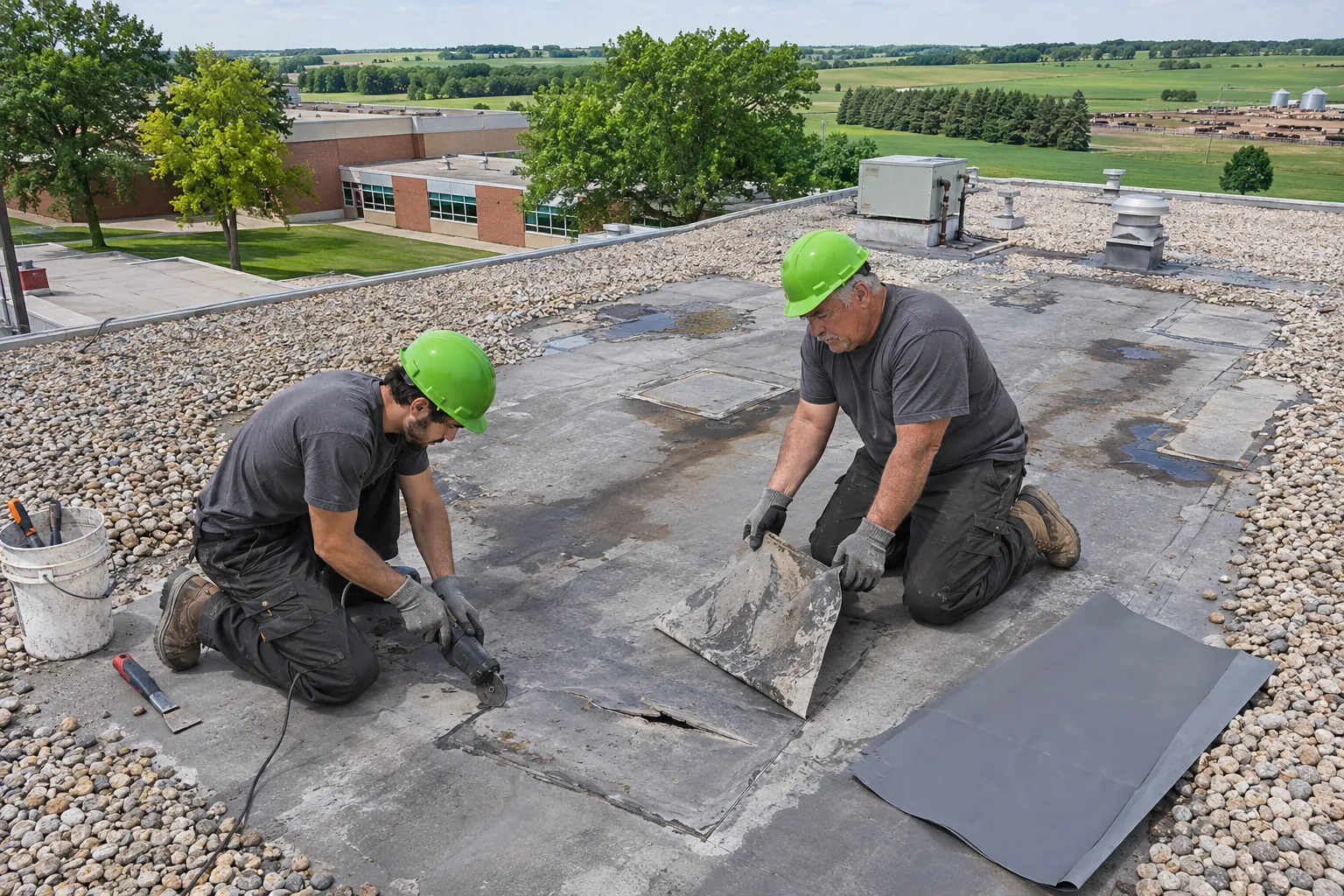
Heat, cold, and foot traffic pull seams apart at the edges. Welded or taped cover strips close the lap and keep water from running under the sheet.
Trapped moisture lifts built-up and modified bitumen plies into blisters. A core cut shows how deep it goes before we cut, dry, and re-ply the area.
Base flashing shrinks and pulls away from walls and curbs over time. New flashing runs up the vertical face and ends under a metal bar or cap.
Patching works when the damage is local. These are the signs we compare on every flat roof.
| Sign | Patch And Repair | Plan A Replacement |
|---|---|---|
| Wet insulation | Confined to a few square yards around the leak | Spread across bays in moisture readings |
| Membrane condition | Flexible sheet with a few open laps | Brittle sheet that cracks when folded |
| Ponding | One low spot near a drain | Standing water across large sections |
| Past repairs | Few patches, each holding | Patch layers stacked on the same seams |
| Leak count | One or two sources found | New leaks after every storm |
Call us. Ponding near a drain often comes from a clogged strainer or a loose clamping ring, and both get fixed on the first visit.
Every flat roof repair follows the same five steps, from the drain outward.
Before anything else, strainers, scuppers, and gutters are cleared. Standing water hides seams and punctures, and a free-flowing drain shows whether the roof slopes the way it should.
Moisture readings and a core cut map the insulation under the membrane. Soaked boards get marked for removal so a patch never seals water in.
Old sealant, dirt, and loose gravel come off, and the sheet gets cleaned and primed. TPO, EPDM, and asphalt sheets each need their own prep before new material bonds.
New membrane, plies, or flashing go down over the prepared area, lapped onto dry, solid roof. Wet insulation is replaced first wherever the core cut found it.
Where the roof allows, we flood the repaired area or watch the next rain. Photos of each repair go into the record for the building.
What changes on the roof surface once a flat roof repair is done.
Flat roofs often share a building with other problems. These services cover the rest.
Steel buildings and additions next to a flat roof get worn screws, open laps, and rusted panels replaced and sealed.
Commercial Metal Roof Repair in Norfolk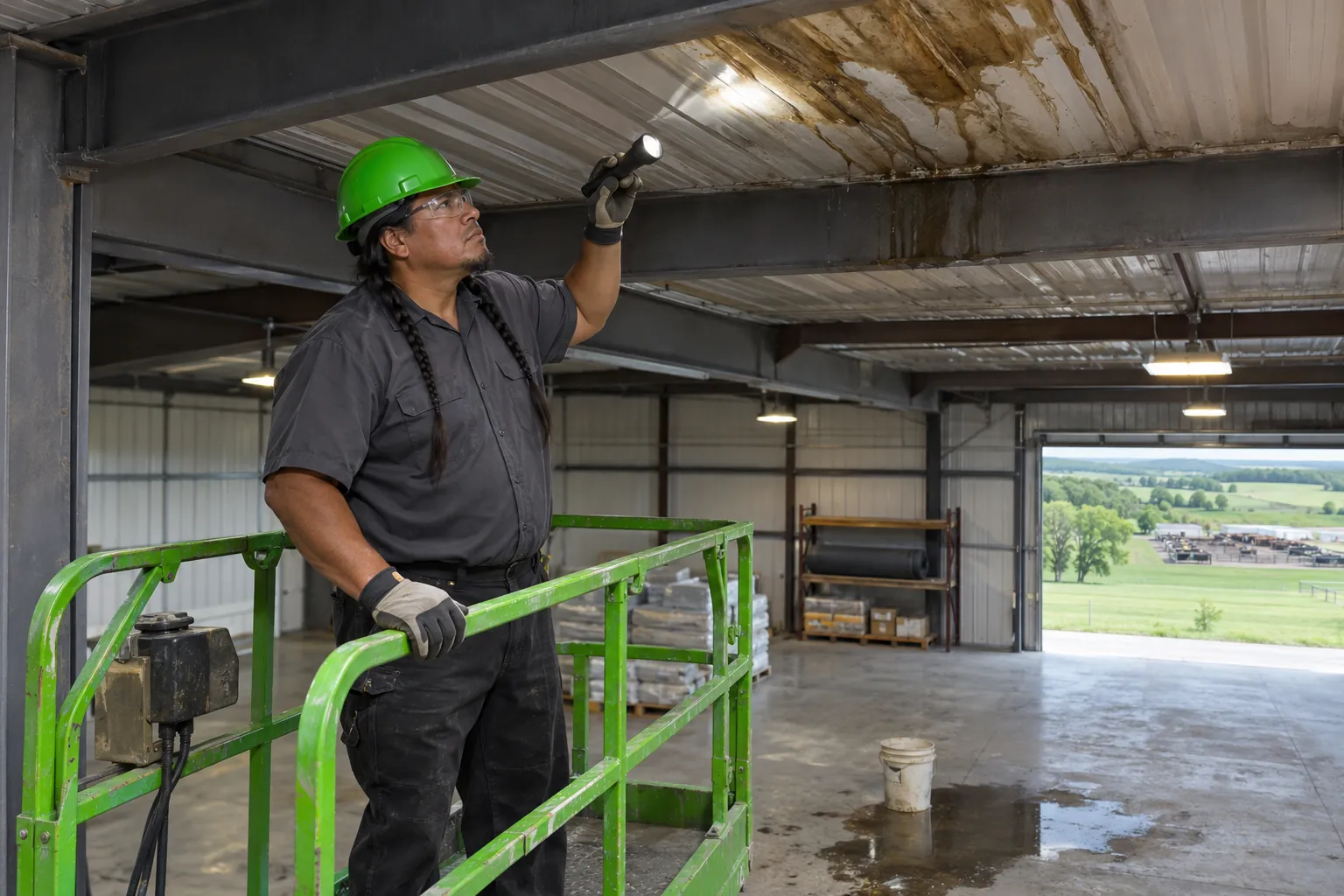
When the drip inside sits far from any obvious problem on the flat roof, leak tracing finds the path along the deck.
Commercial Roof Leak Repair in Norfolk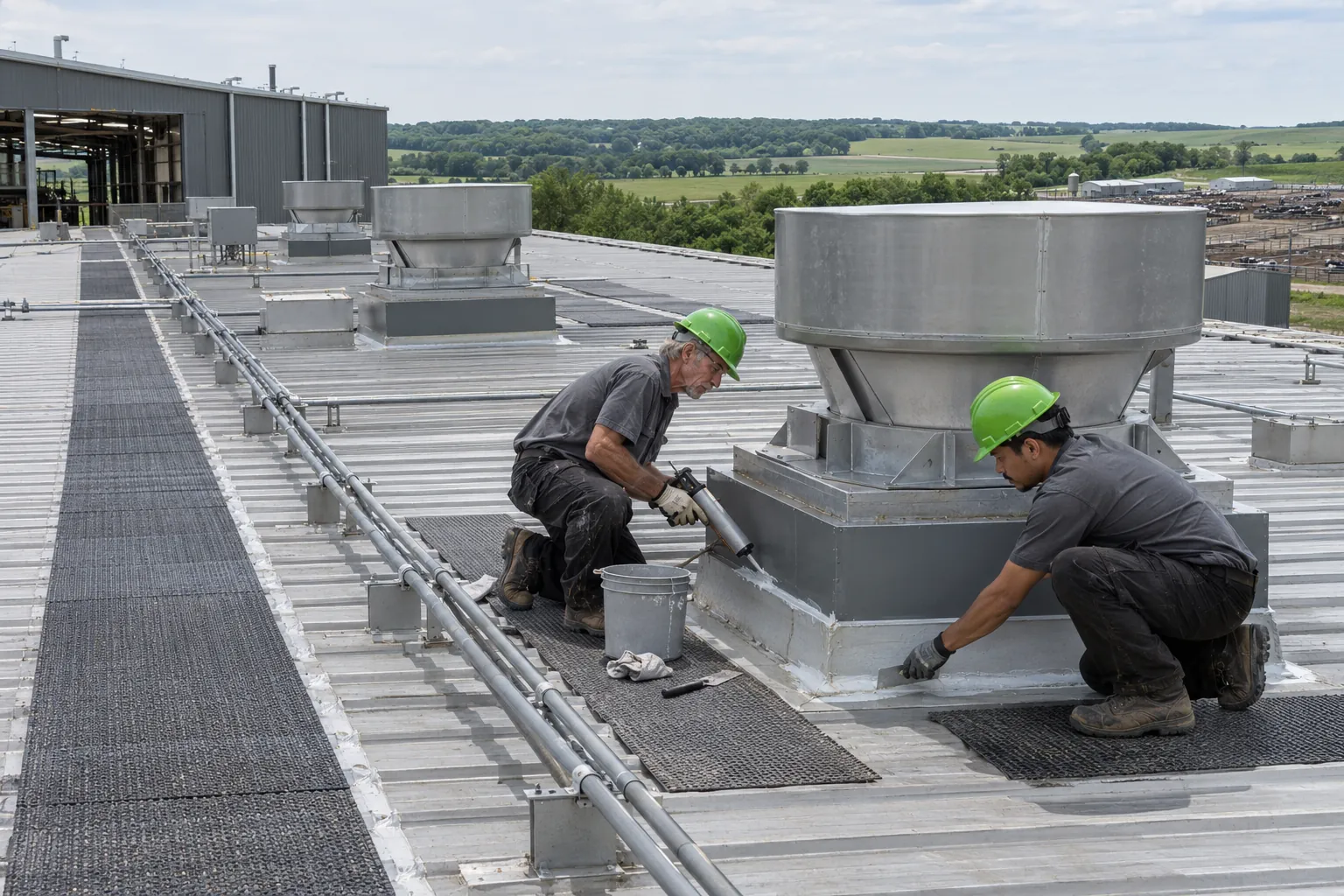
Flat plant roofs crowded with fans, ducts, and pipe supports need regular curb flashing and walkway repairs.
Industrial Roof Repair in NorfolkAnswers written for flat membrane and built-up roofs.
We clear the strainer and bowl, then check the clamping ring and the membrane under it, since a loose ring or a split sheet at the bowl causes most drain leaks. The ring gets reset, damaged membrane is replaced, and a new strainer goes on. A drain sitting high gets the area around it rebuilt.
Three things set most of the price: the membrane on the roof, the size of the repair, and how much insulation underneath is wet. Sealing one open lap on TPO is a small job, while cutting out a soaked section of built-up roof is larger. Roof height and nearby equipment add labor.
Heavy rain raises water higher on the roof than a light shower does. When a drain or scupper clogs, water backs up against seams, parapet flashing, and membrane edges that normally stay dry, then runs underneath. Small punctures also show up only in a downpour. Tracing the water path during or after a storm points to the opening.
Ponding gets fixed by getting water to a drain. Clearing outlets comes first, and then we check for a sagged deck or crushed insulation under the low spot. Tapered crickets tilt water toward the drain, and a new drain or scupper helps on larger roofs. Standing water ages membrane and loads the deck.
School work is scheduled around classes and kept away from doors students use. Many school roofs were built in sections over the years, each with a different membrane, so we confirm which section leaks before ordering material. Short repairs fit school days, and larger sections are usually saved for summer break when the building is quiet.
Yes. The Norfolk City Code adopts the 2018 International Building Code in Section 6-16, with local changes in Section 6-18. Commercial roof repair and reroofing follow that code. For a larger repair or a reroof, the Norfolk building division can tell you which permit your scope needs.
Tell us what you see on the roof or the ceiling, and we will check the drains, seams, and insulation before pricing the repair.