Flat Roof Repair
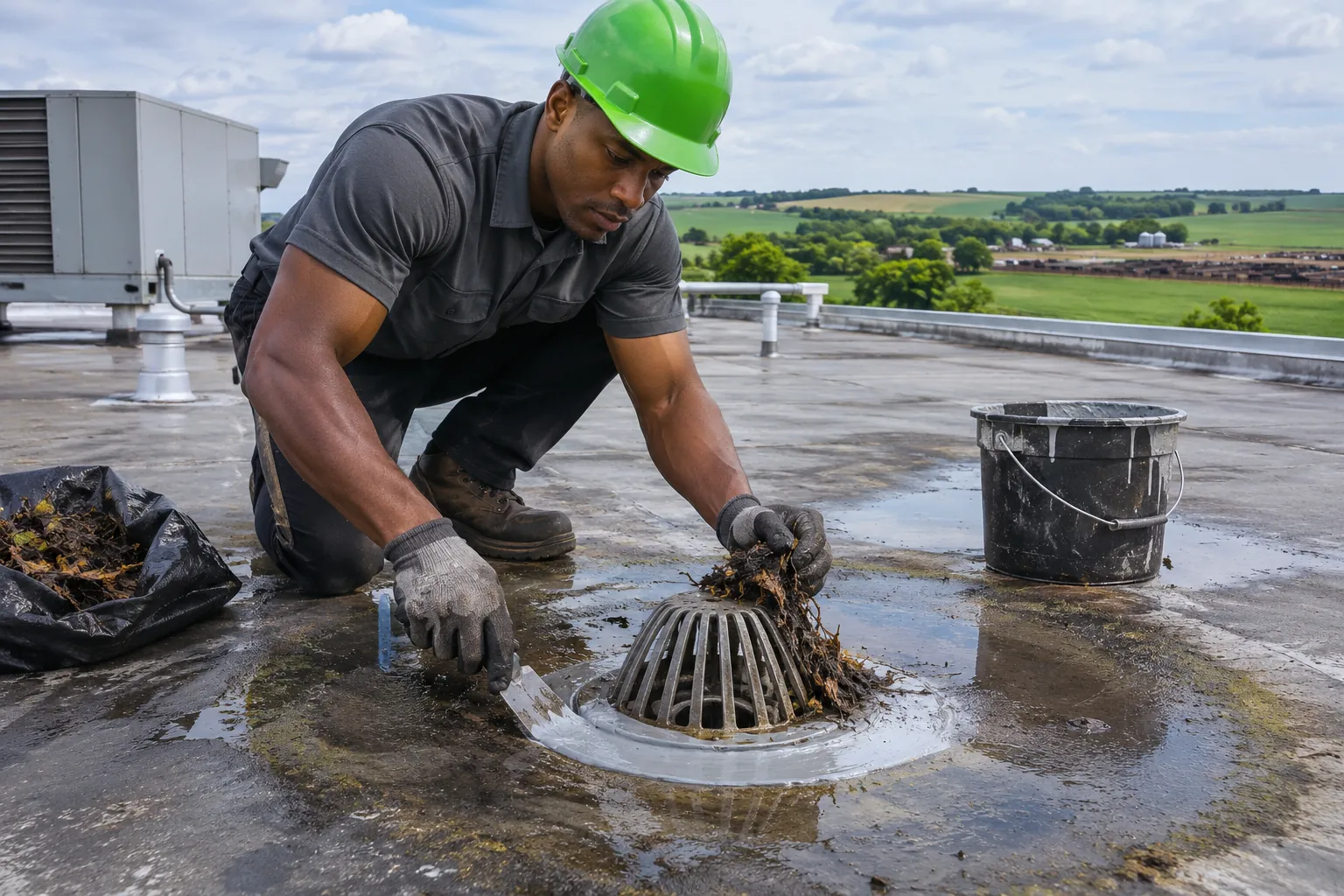
Office and warehouse wings beside the plant have low-slope roofs, where drains, membrane seams, and parapet flashing need work.
Flat Roof Repair in NorfolkAs a Norfolk industrial roof repair contractor, we repair curbs, penetrations, seams, and walkways on plant roofs while production keeps running below.
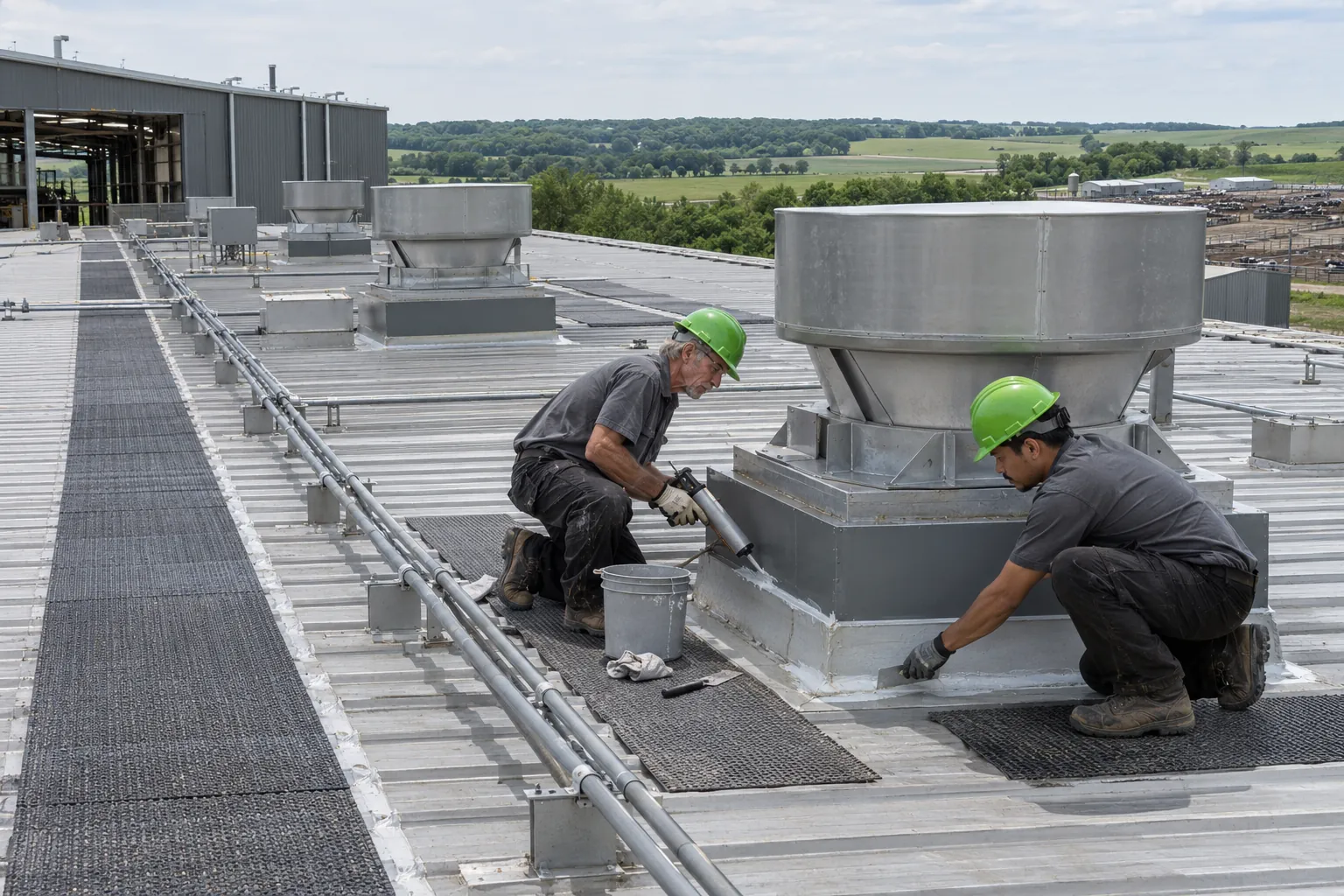
Norfolk industrial roof repair deals with roofs that work as hard as the floor below them. Steel plants, processors, and fabrication shops put fans, ducts, pipe racks, and service walkways on top, and each one cuts through the roof.
Those penetrations, plus vibration and heat from process equipment, are where plant roofs fail. Repairs get planned with plant staff around safe zones, lift access, and the schedule on the floor, so the roof gets fixed while the line keeps running.
Plant roofs fail in five predictable places.
Grease, heat, and chemicals in the exhaust break down membrane and sealant near the fan. Vibration loosens the curb fasteners.
Large curbs under air handlers carry long runs of flashing. Corners split first as the unit vibrates, then water tracks along the curb and into the plant below.
Supports set straight on the membrane cut into it as pipes expand and contract. New pads spread the load and protect the sheet.
Maintenance crews cross the same path to fans and units every day, often carrying tools and parts. Foot traffic wears through surfacing and opens seams along that path.
Heavy equipment shakes the deck, working fasteners loose and pulling at laps. Seams near presses and fans open first.
Every plant runs differently. These are the scheduling choices we work out with plant staff.
| Repair Type | During Production | During A Shutdown |
|---|---|---|
| Curb reflashing | Yes, with the fan locked out briefly | Yes, when several fans share one curb line |
| Seam repair | Yes, roof-side work over open floor | Better over sensitive process lines |
| Hot work (welding, torch) | Low-activity hours with a fire watch | Preferred near exhaust and dust |
| Panel or deck replacement | Only over protected, cleared areas | Preferred over running equipment |
| Walkway pads | Yes, along the service path | Any time |
Call us. A temporary repair can hold the water off the line until a planned shutdown allows the permanent fix.
Plant work adds safety and scheduling steps to every repair.
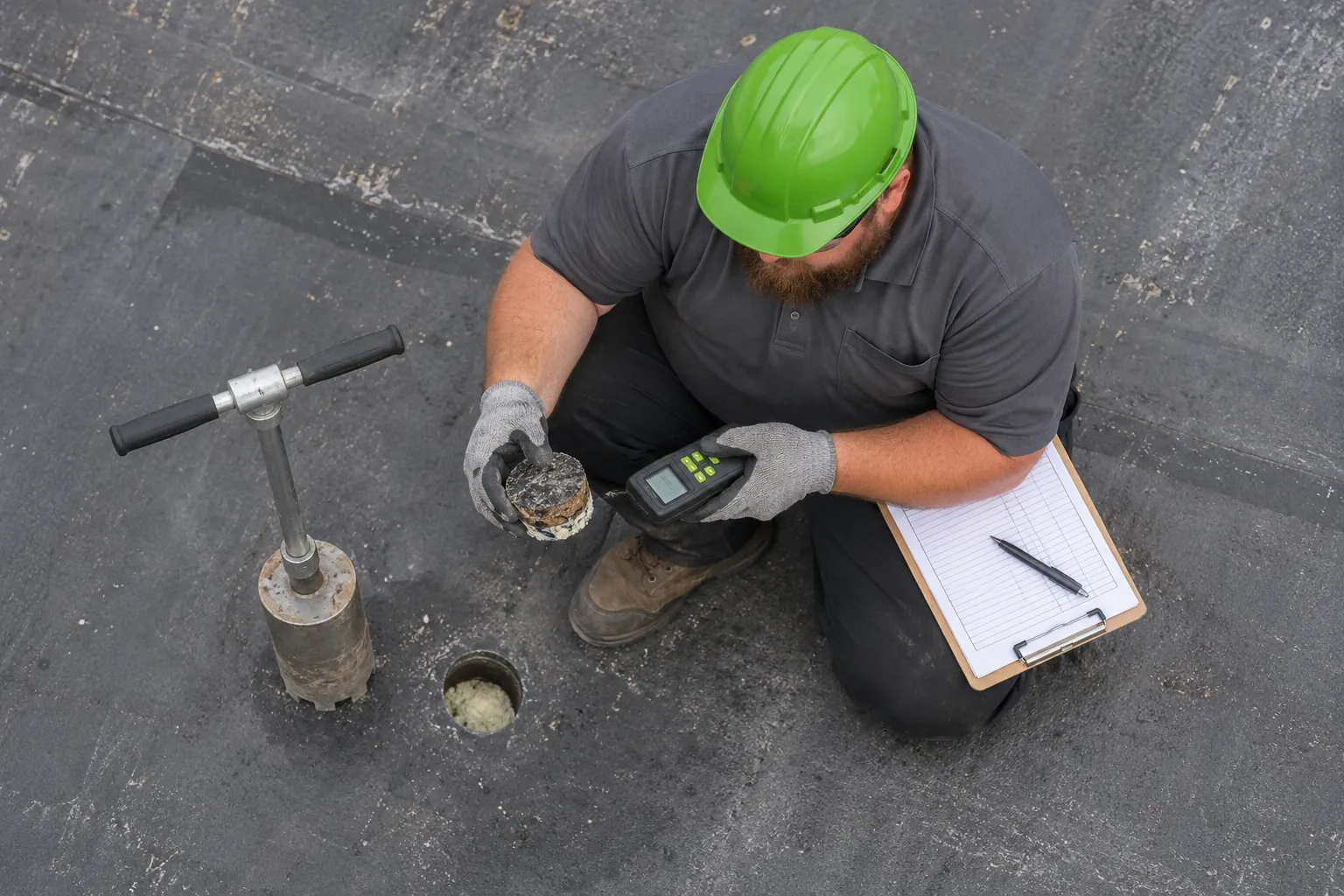
We set safe work zones, lift locations, and lockout needs with maintenance and safety staff before anyone goes on the roof.
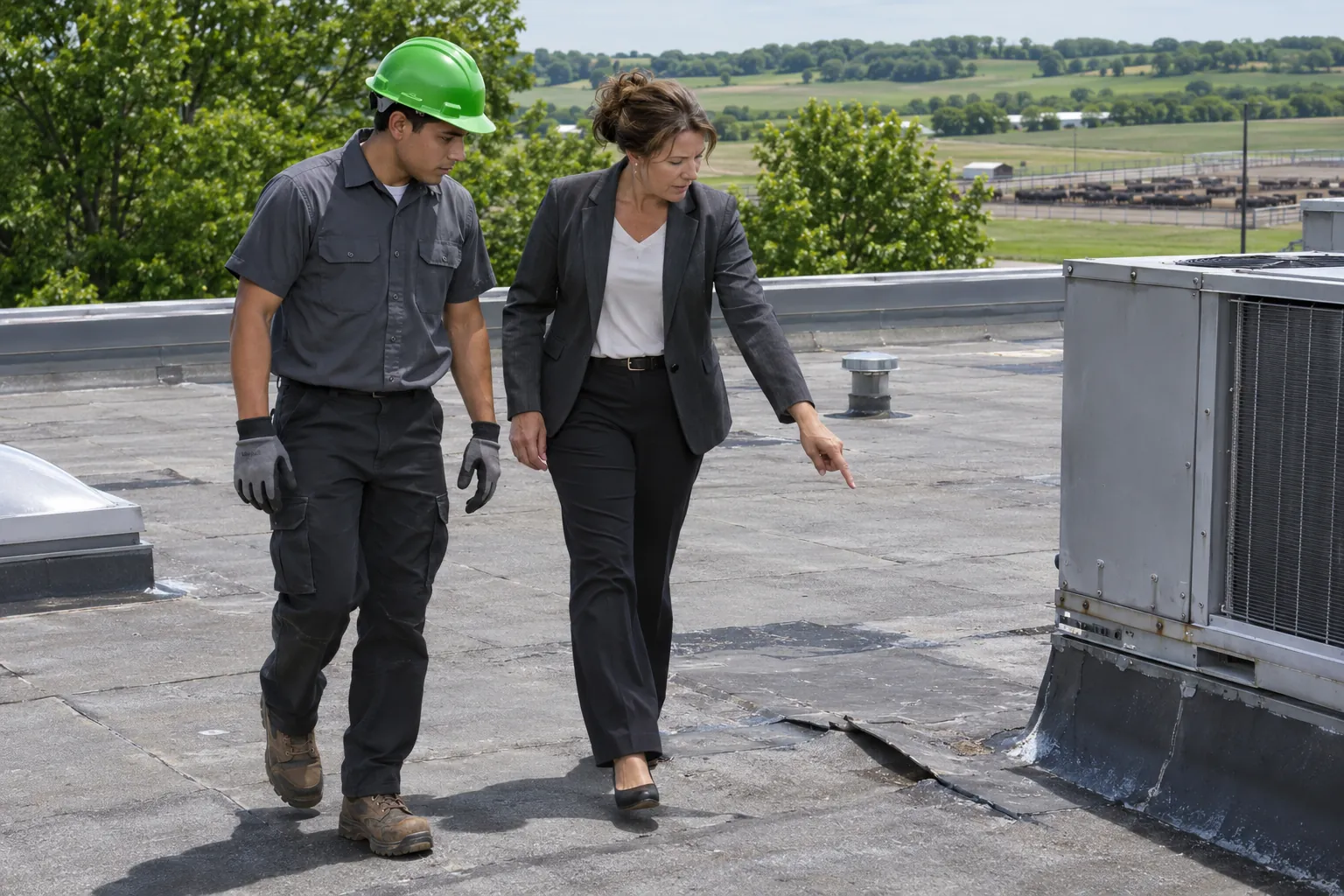
Membrane or panels, seams, curbs, drains, and every penetration get checked, along with rust and stains on the deck from inside.
Problems over running equipment, electrical gear, or finished goods go first. The rest of the roof repairs are grouped by area so lifts and material move as few times as possible.
Crews work one roof zone at a time, cover or protect the equipment below, and schedule hot work or strong-smelling materials for quiet hours when fewer people are on the floor.
A report lists each repair with photos and its location on the roof, ready for the plant maintenance file.
What changes on a plant roof once the repairs are done.
Plants often combine roof types. These services cover the other sections.
Office and warehouse wings beside the plant have low-slope roofs, where drains, membrane seams, and parapet flashing need work.
Flat Roof Repair in Norfolk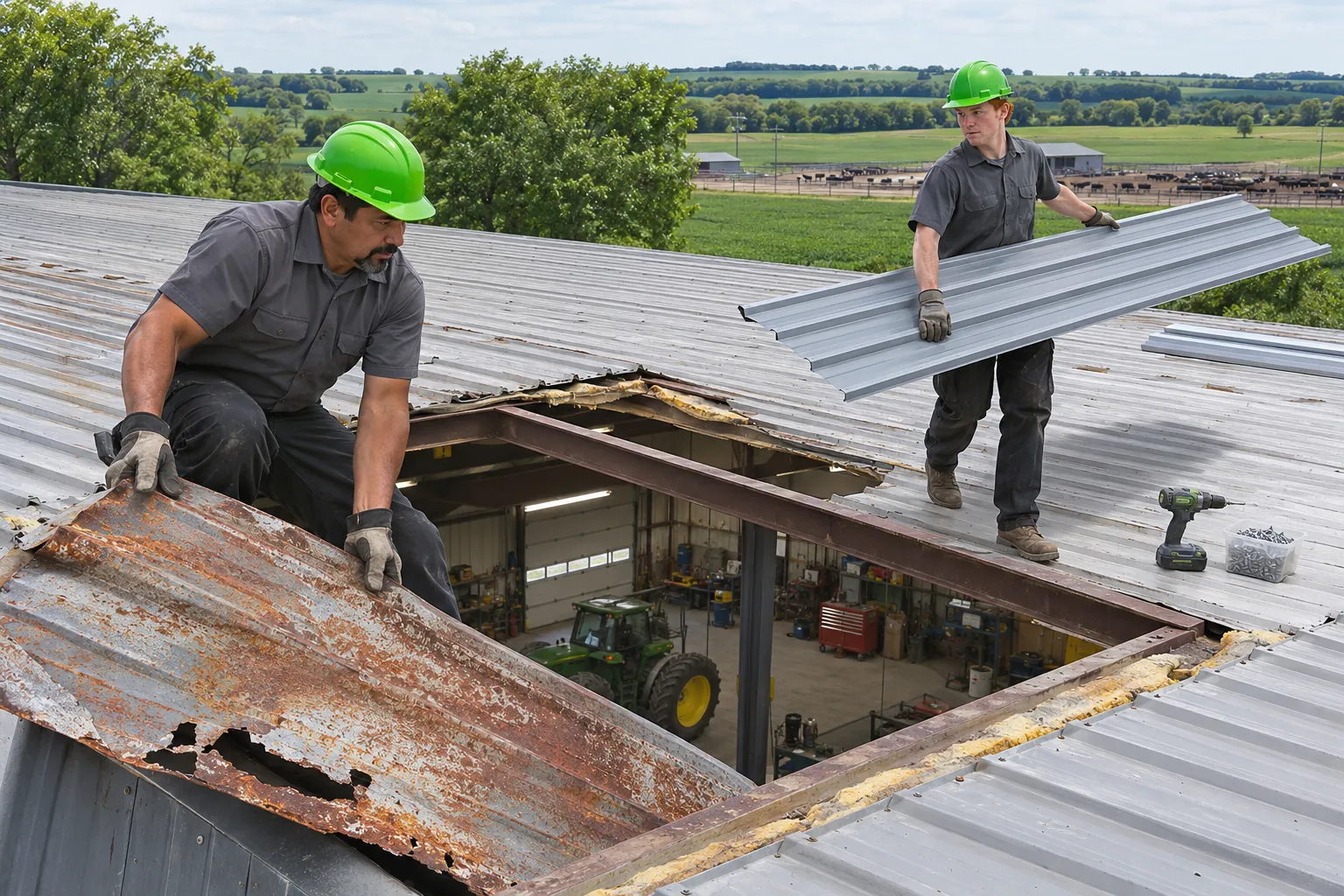
Steel production halls and storage buildings come with exposed fasteners, open laps, and panels worn by exhaust.
Commercial Metal Roof Repair in Norfolk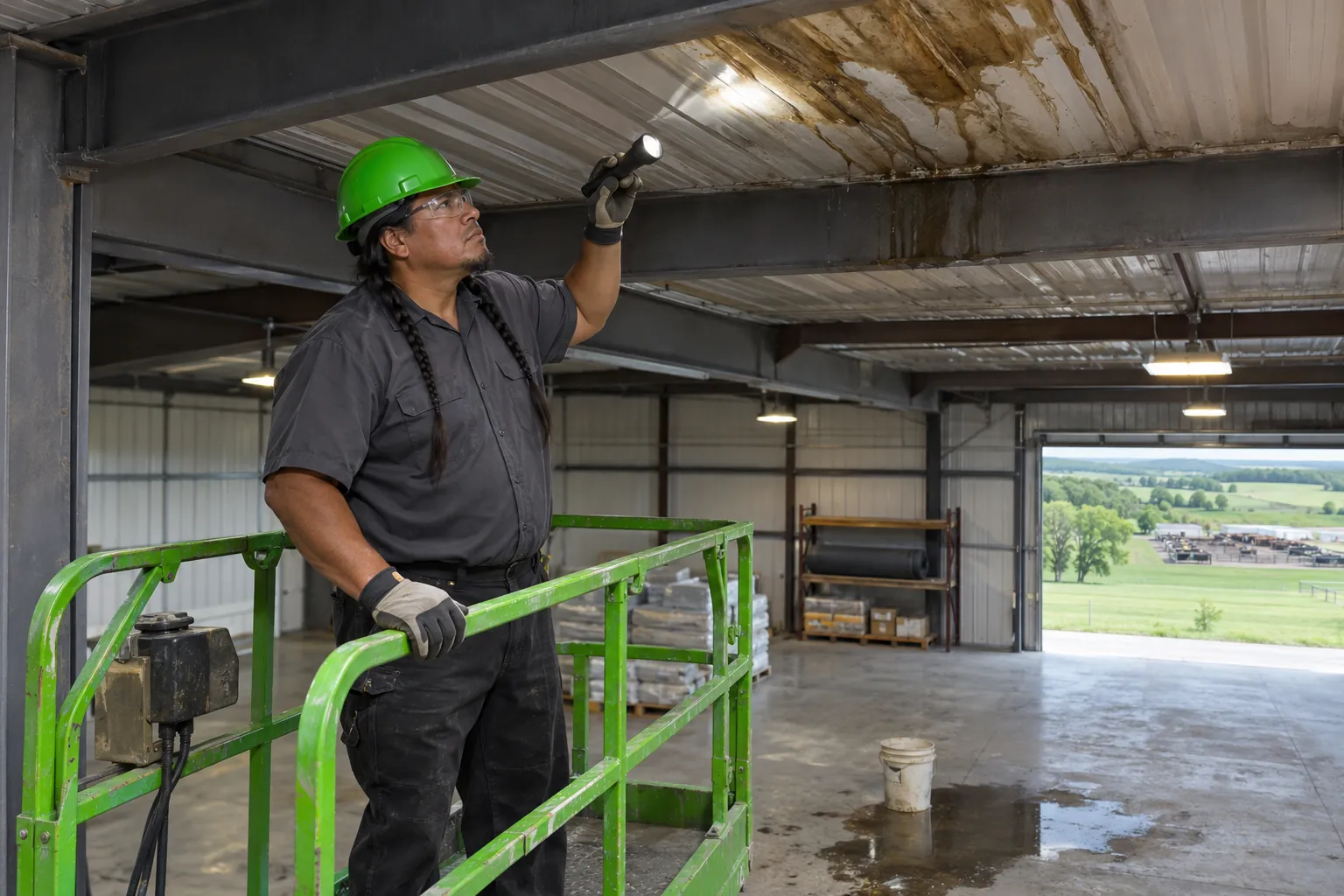
Drips over the floor with no clear source get traced from the stain upslope through the deck to the opening.
Commercial Roof Leak Repair in NorfolkAnswers for roofs over working plants.
The roof surface, seams, flashing, drains, and every penetration, plus exhaust fans, rooftop units, pipe supports, and walkways. Inside, we look for stains, rust on the deck, and wet insulation. You get a report listing each problem with a photo and its place on the roof. Spring and fall inspections catch winter and summer damage early.
Penetrations, fasteners, and areas near heat or process exhaust. Vibration from heavy equipment loosens fasteners and opens seams, exhaust corrodes metal and dries sealant, and crews walking to equipment wear paths into the surface. Repairs target those spots, and walkway pads protect the routes crews cross most.
Work happens from the roof side and is planned around the floor below. Safe zones, protected equipment, and lift locations are set with plant staff, and hot work or strong-smelling materials go in low-activity hours. Where a full repair needs a shutdown, a temporary repair holds the leak until that window.
The repair covers the curb, its flashing, and the roof surface around the fan. Grease, heat, and chemicals in the exhaust break down membrane and sealant, and vibration loosens curb fasteners. Damaged flashing is replaced, the curb resealed, and worn roofing near the fan repaired. Grease containment around process exhaust protects the roof afterward.
Twice a year, in spring and fall, plus after any hail or high-wind storm. Plant roofs take more foot traffic and more heat and vibration than most roofs, so curbs, fan bases, and walkway routes wear faster. Regular checks catch an opened seam or cracked curb while it is still a small repair.
Yes, within limits. Under Neb. Rev. Stat. 71-6406, a city can enforce its own building code if it adopts or generally conforms to the state building code and is updated within two years of a state update. Local amendments are allowed. The Norfolk building division can confirm which rules apply to an industrial roof repair.
Tell us about the plant, the roof, and when production can make room. We will inspect and price each repair.