

Flat Roof Repair
When the trace ends at a split drain bowl, an open membrane seam, or a blister on a low-slope roof, flat roof repair handles it.
Flat Roof Repair in NorfolkAs a Norfolk commercial roof leak repair contractor, we follow water from the stain inside to the opening on the roof, then seal it and dry out the damage.
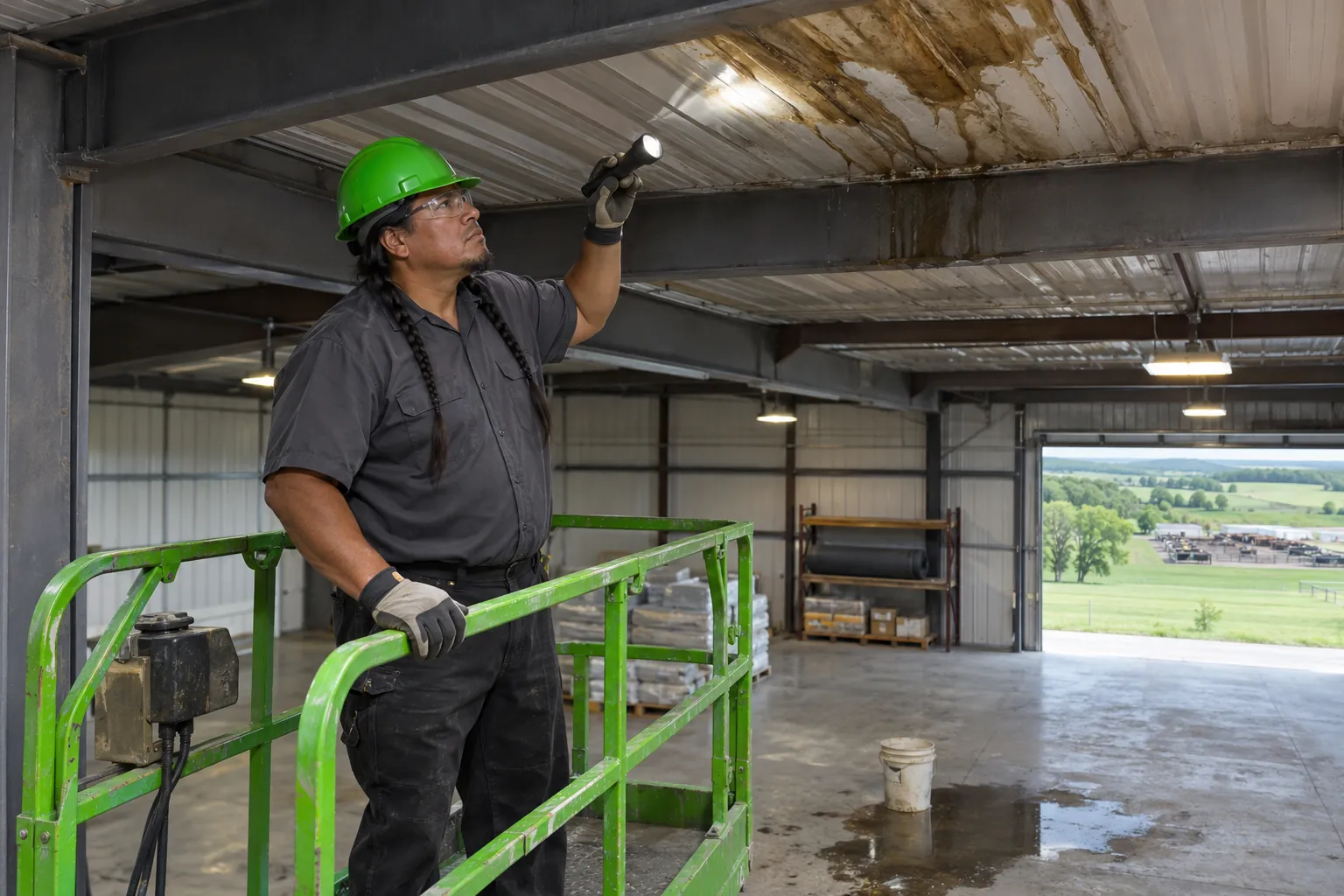
Norfolk commercial roof leak repair starts where most owners first see the problem: a ceiling tile, a wet floor, or a drip over shelving. Water rarely falls straight down. It runs along deck flutes, purlins, and insulation joints before it finds a way into the building.
So we mark every drip point inside, then check the roof above and upslope of those marks. Seams, fasteners, flashing, and penetrations in that zone get inspected until the entry point shows, and the insulation around it is tested for trapped water.
Five sources account for most of the leaks we trace.
Hail punctures membrane, cracks flashing, and splits seams on metal roofs. Small holes stay dry for weeks, then leak in the next hard rain.
Meltwater refreezes at drains, gutters, and edges. The ice dam pushes water back into seams and flashing that never sit in water during summer.
Domes crack, frames lose sealant, and membrane flashing pulls off the curb. Skylights near drains take on extra water and leak first.
One clogged strainer turns a light rain into standing water. The pond rises over laps and flashing until it finds a gap.
Unit curbs carry flashing on four sides plus duct and electrical penetrations. Condensate lines and loose access panels add their own water.
Where and when water shows up inside narrows the search on the roof.
| Clue Inside | When It Shows | Where We Look First |
|---|---|---|
| Drip only in heavy rain | Downpours only | Drains, scuppers, and parapet flashing |
| Stain spreading after snow | Thaw days in late winter | Edges, gutters, and ice-blocked drains |
| Water along an exterior wall | Wind-driven rain | Coping joints and wall flashing |
| Drip under a rooftop unit | Rain, or hot and humid days | Curb flashing and condensate lines |
| Rust spots on the deck over racking | Year-round | Fasteners and laps upslope of the rust |
Call us. A temporary dry-in stops the water first, and the permanent repair follows once the roof is dry.
Leak tracing follows five steps, starting inside the building.
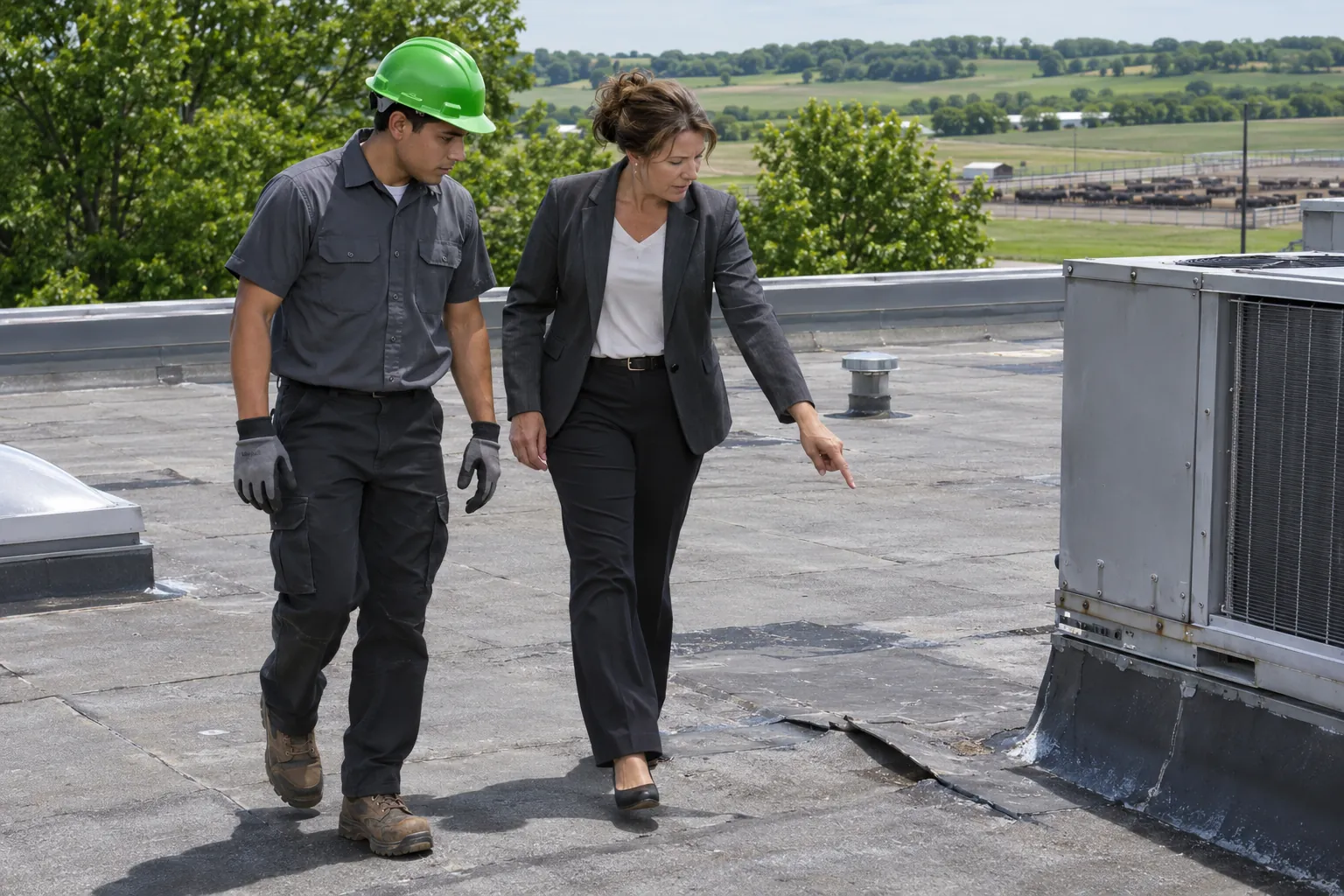
Every stain, drip point, and wet spot gets marked and photographed. Notes on when water appears, during rain, wind, or thaw, narrow the search.
On the roof, the search starts above the marks and moves upslope along the deck flutes and purlins, where water travels before it drips.
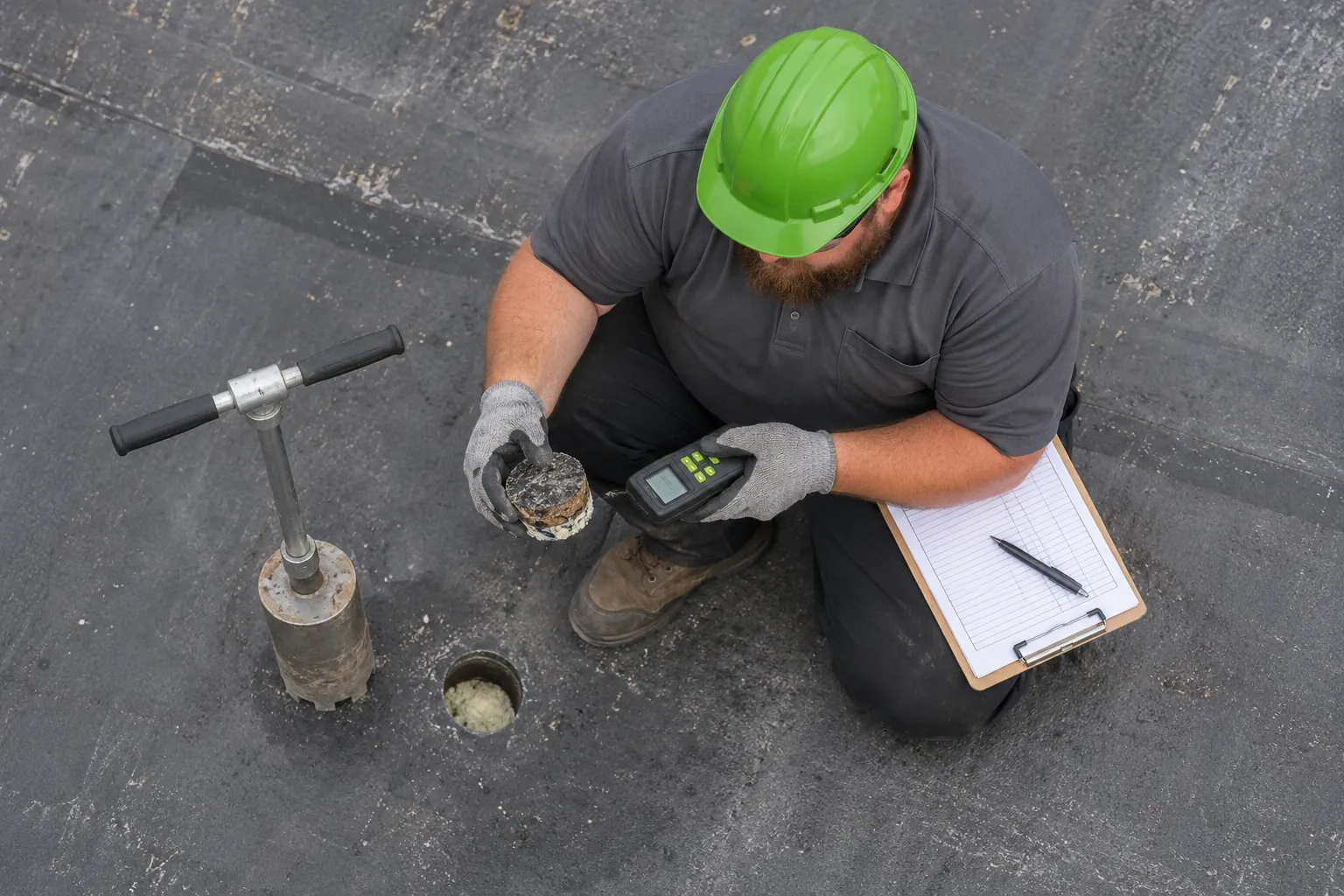
Seams, fasteners, flashing, and penetrations in that zone get a close look. A moisture scan or water test confirms the source on large roofs.
If water is reaching equipment now, a temporary dry-in goes on first. Then the opening is repaired with material that matches the roof.
Wet insulation and any damaged decking around the leak are replaced, so trapped water cannot start a second leak nearby.
What a traced and repaired leak looks like inside and on the roof.
Once the source is known, the fix usually falls under one of these services.
When the trace ends at a split drain bowl, an open membrane seam, or a blister on a low-slope roof, flat roof repair handles it.
Flat Roof Repair in Norfolk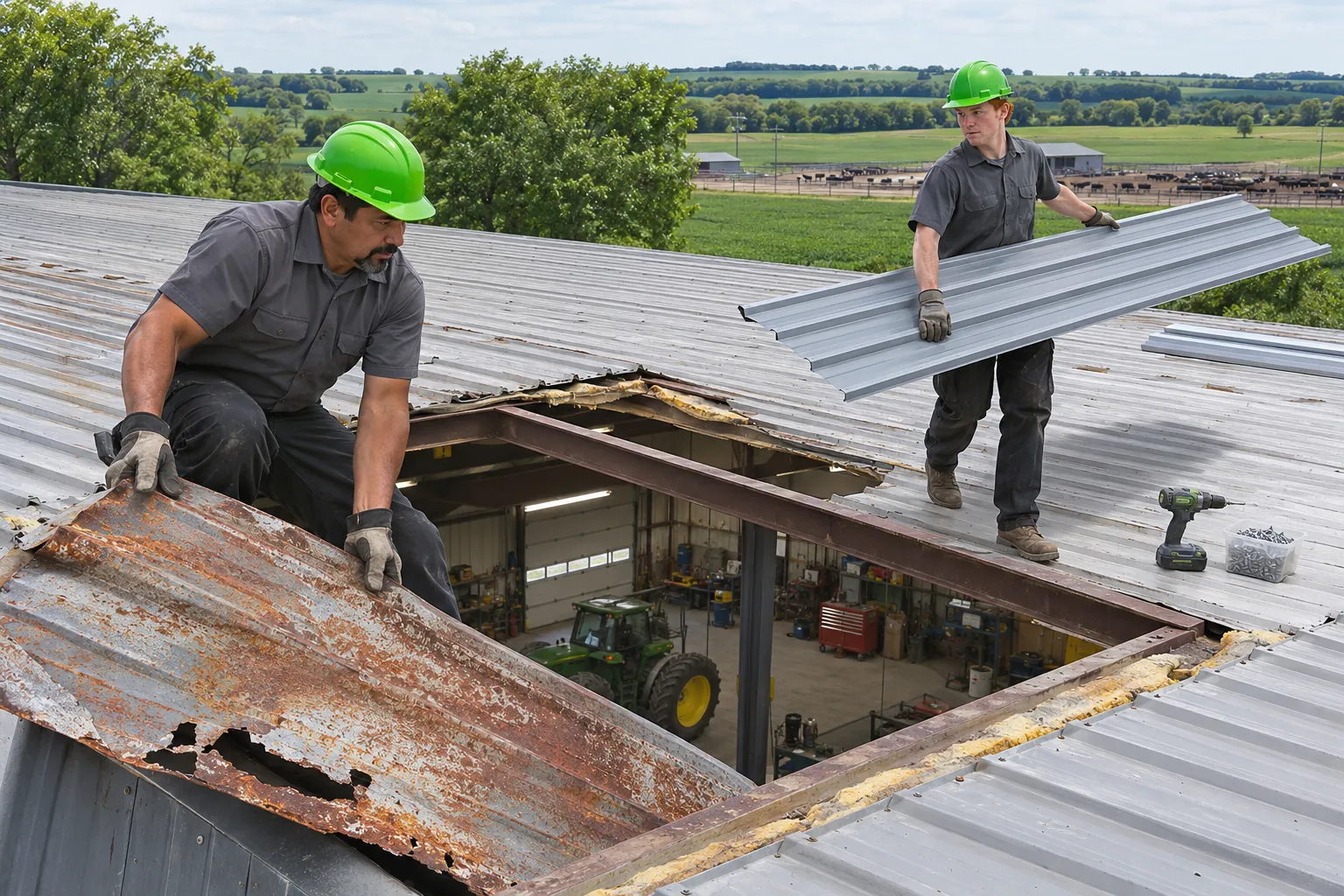
Rust trails and drips along a panel row lead to fastener, lap, and ridge cap repairs on steel roofs.
Commercial Metal Roof Repair in Norfolk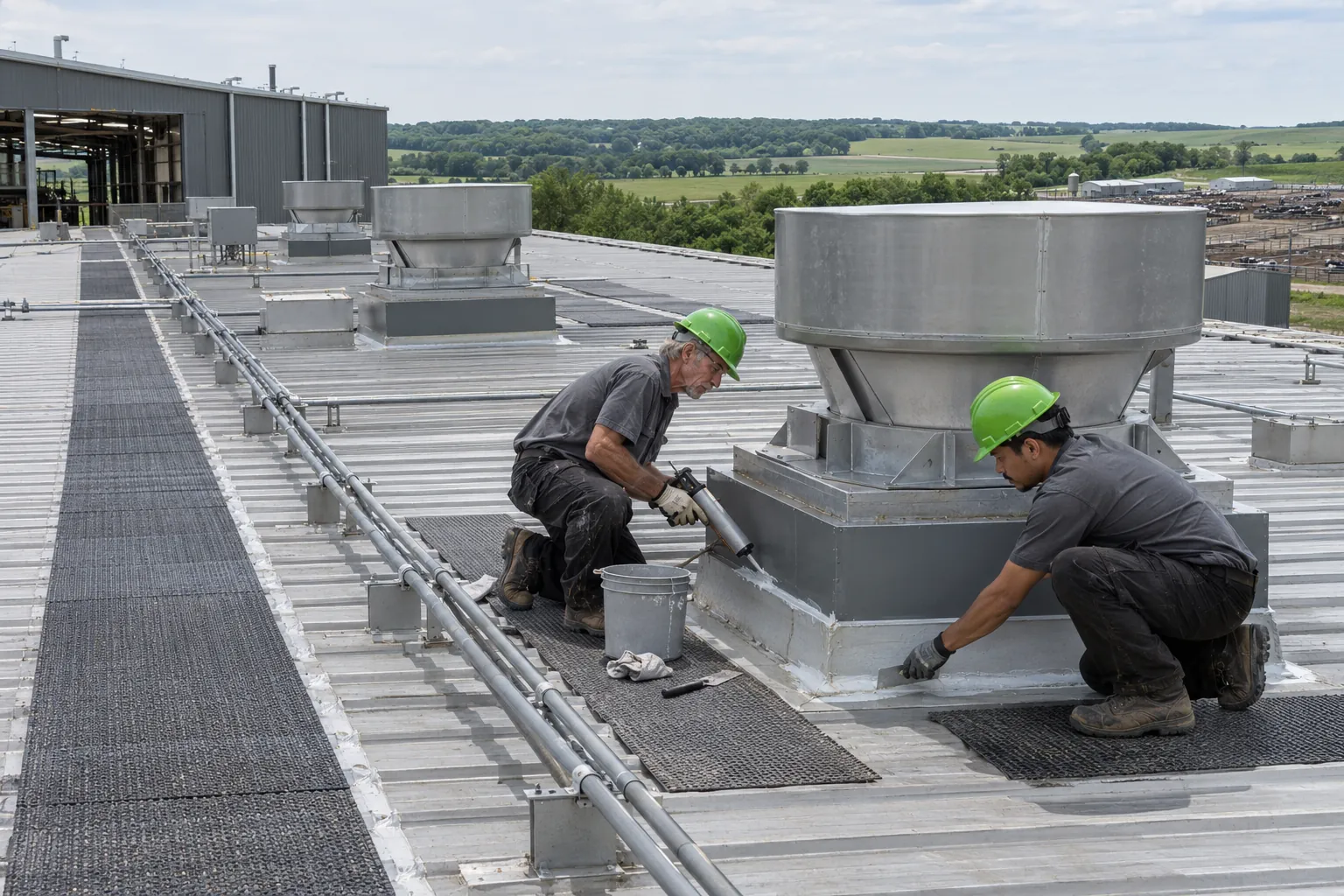
Leaks under fans and ductwork on plant roofs lead to curb reflashing and penetration repairs planned with plant staff.
Industrial Roof Repair in NorfolkAnswers about finding and stopping roof leaks.
Photograph the damage inside and get the roof checked soon. Hail can puncture membrane, crack flashing, and split metal seams, and small holes often stay dry until a later storm. We inspect the whole roof, mark each damaged spot, and make temporary or permanent repairs. The photos and notes help with an insurance claim.
The biggest factor is how long the leak takes to find. Some trace to one open seam in minutes, and others run along the deck and take several test cuts. The amount of wet insulation, any damaged decking, and work around rooftop equipment add material and time. Roof height and access set the labor.
No. A roof that leaks only in heavy rain has a weak point that water reaches when it rises higher than usual: a blocked drain, an open seam, or worn flashing. Those spots tend to get worse with each storm. Finding the entry point early keeps the damage to one small repair.
Inside first. We mark drip points and stains on the floor plan, then check the roof above and upslope, since water runs along deck flutes and purlins before it falls. Seams, fasteners, flashing, and penetrations in that zone get inspected. On large roofs, a water test or moisture scan confirms the source.
Meltwater refreezes at drains, gutters, and edges, and the ice backs water into seams and flashing. The National Weather Service office in Omaha/Valley recorded 28.6 inches of snow at Norfolk between October 1, 2022 and April 5, 2023, slightly above normal. Snow like that sits on drains for weeks. We repair the openings meltwater finds.
Most skylight leaks come from the curb flashing or the seal between the dome and frame. We remove failed sealant, replace damaged flashing, and reseal the frame, and cracked domes get replaced. Skylights near drains get extra attention because water gathers around them during heavy rain.
Tell us where the water shows and when. We will trace it to the roof, seal the opening, and replace what the water soaked.